What 30 Years in Recruiting Taught Me About Hiring
Lessons from building recruiting teams, scaling mortgage hiring, and finding technical talent for work that had to get done.

After more than 30 years in recruiting, the first question I ask a hiring leader is what the person will be responsible for once they start. The answer changes who I call, what I ask in an interview, and what I tell a candidate about the opportunity. An experienced loan officer considering a branch move needs a different conversation from an infrastructure engineer considering a client-facing assignment. Both deserve a clear account of the work and how success will be measured.
Build the recruiting capacity before you raise the hiring target
As VP of Talent Acquisition at PennyMac, I built a dedicated team of seven loan officer recruiters. In the first year, annual hiring grew from roughly 300 to 900 and average time to fill fell from 36–42 days to 28. We shifted to proactive sourcing so the team could build relationships with experienced mortgage professionals before an immediate opening forced the search.
In a loan officer screen, I looked at annual loan volume, transaction counts, and tenure in context. Two candidates can report similar production and have very different experience. I want to understand how they generate business, what support they rely on, and whether that experience fits the market and branch they would join. Those questions make the hiring-manager conversation more useful and give the candidate a clearer view of the move.
Make the technical intake specific enough to guide the search
As Director of Talent Acquisition at JDA TSG, I led national recruiting for Microsoft’s Premier Field Engineering program. The work called for technical professionals who could apply their expertise in enterprise client environments. In a search like that, I want hiring leaders to spell out which systems the candidate must have worked with directly, what problems the person will own, and how much client interaction the assignment requires.
At JDA TSG, I also led a proof-of-concept hire for Intuit from intake through accelerated onboarding. Delivering the hire gave our leadership a concrete example of what the team could deliver as it discussed expanding the relationship. At Inogen, the challenge was allocating capacity across 78 open requisitions in IT, engineering, R&D, medical, finance, and HR. I coached three recruiters and two sourcers and worked with business leaders to decide which openings required attention first.
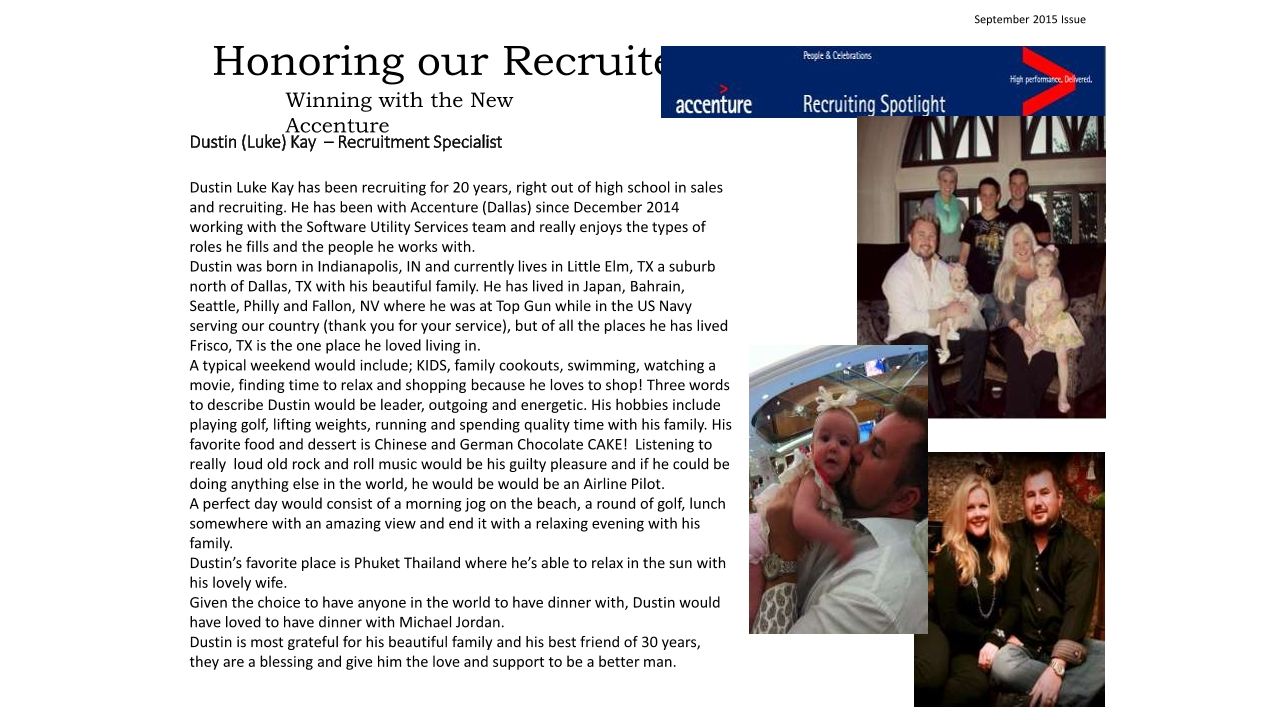
At Accenture, I recruited for Software Utility Services and enterprise infrastructure roles spanning solution architecture, network engineering, systems administration, and technical support. I delivered 172 hires in the first two quarters of 2015, including 26 in one month. When screening for infrastructure roles, I ask candidates to describe a system they personally supported, a problem they handled, and what they owned through resolution. Those answers give the hiring manager something specific to follow up on.
Track what happens after the first recruiting conversation
At American Pacific Mortgage, I partnered with retail branch leaders to identify experienced loan officers in competitive markets. Over nine months, 209 recruiting conversations led to 94 opportunity meetings, of which 79 took place. The pipeline represented approximately $1.086 billion in potential annual loan production. That estimate describes the opportunity the pipeline represented. The meetings held tell me how often outreach turned into a real conversation with branch leadership.
I review those stages separately. If outreach produces few qualified conversations, I revisit the target list and message. If candidates agree to meet and then drop off, I look at scheduling delays, whether the candidate knows what to expect, and how the handoff to the hiring leader was handled. Each number points to a different decision.
Coach the stage where the work is getting stuck
At Metro Systems, I led 47 recruiters. In a team review, I want a recruiter to leave with one action they can take on a specific search. If the pipeline is thin, we can review which companies we’ve targeted and listen to how the opportunity is described. If qualified people are waiting for feedback, I work with the hiring manager to agree on who will respond and by when. At Premier Talent Solution, the agency I founded, I brought that same approach to executive search, workforce planning, and specialized hiring.
Before launching your next search, ask the hiring manager to name one responsibility the new hire should be able to take on in the first 90 days. Use that answer to write the outreach message, choose a screening question, and agree on what the interview panel will look for. When the search stalls, you’ll have something concrete to revisit with the team.